
The Ultimate Denim Jeans Manufacturers in Pakistan Handbook for Buyers
Choosing the right denim partner can shape everything from product quality and production timelines to customer satisfaction and long-term growth. For fashion brands, retailers, and private-label businesses, finding dependable Denim Jeans Manufacturers in Pakistan is not simply about comparing quotations. It is about understanding production capabilities, fabric expertise, quality systems, customization options, and communication standards.
Pakistan has developed a strong reputation within the global textile and apparel sector, giving buyers access to an established manufacturing ecosystem. From denim fabric development and washing techniques to stitching, finishing, and packaging, the sourcing process involves many moving parts. In this article, we are going to examine the practical factors buyers should consider before placing an order and explain how to turn sourcing decisions into a stronger, more reliable supply strategy.
A common sourcing mistake is contacting manufacturers before clearly defining the product. A buyer should first establish the intended fit, fabric weight, color, stretch level, construction details, finishing requirements, size range, and target market.
A detailed product brief gives the manufacturing team something concrete to work with. It can include measurements, technical sketches, fabric preferences, wash references, trims, labels, packaging requirements, and expected order quantities.
This approach reduces unnecessary revisions and helps manufacturers provide more realistic production estimates. It also makes sample evaluation easier because every detail can be compared against an agreed specification rather than personal interpretation.
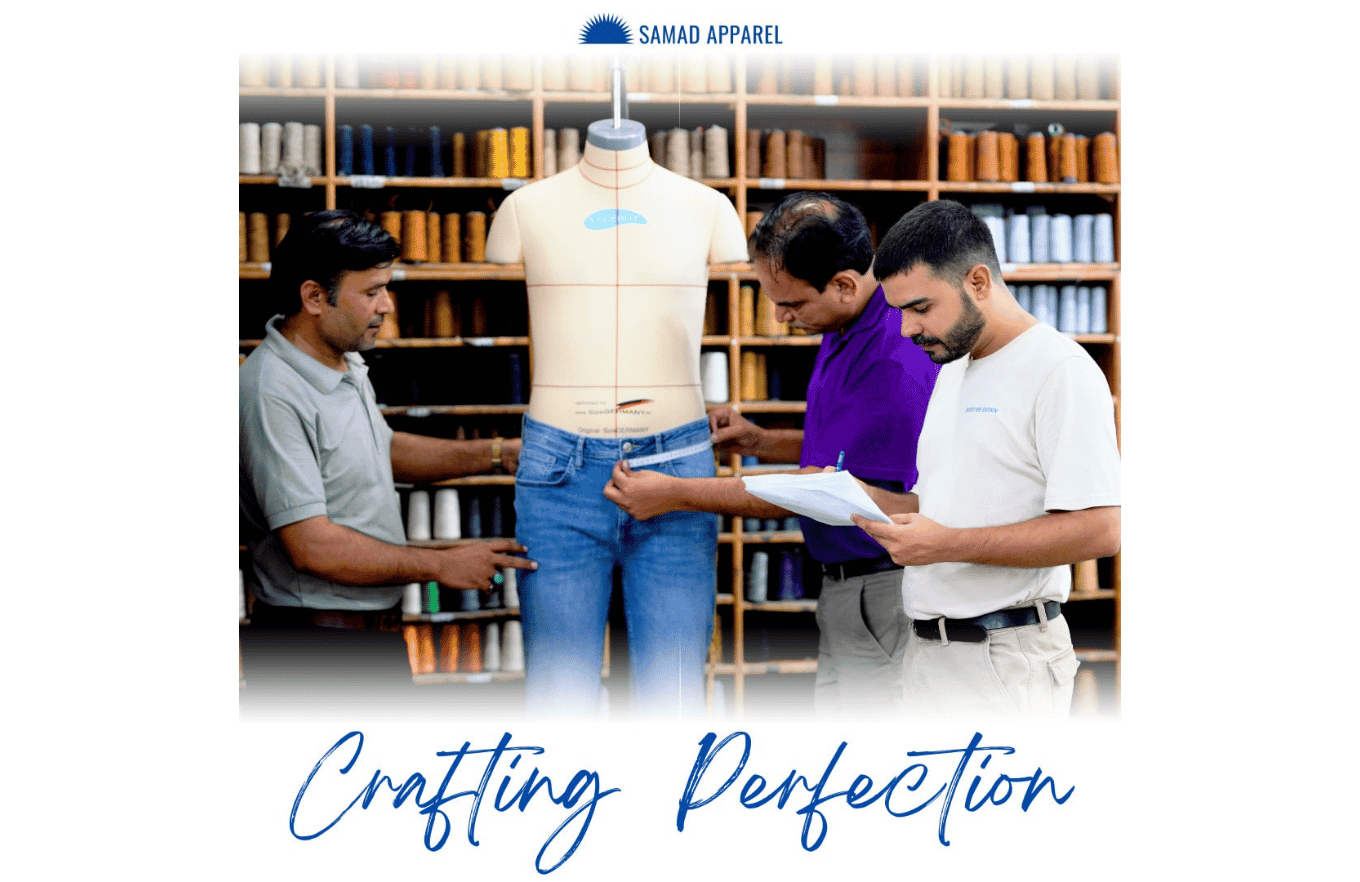
Denim manufacturing is more specialized than simply cutting and stitching fabric. The final appearance depends heavily on fabric selection, garment construction, washing, finishing, and quality control.
Buyers should ask about available denim compositions, fabric weights, stretch options, and sourcing arrangements. Washing capabilities deserve equal attention because treatments such as stone washing, enzyme washing, bleaching, tinting, whiskering, and other finishing techniques can significantly influence the final product.
A manufacturer with broader technical capabilities can give brands greater flexibility when developing different collections. Samad Apparel, for example, can be considered within this wider sourcing conversation when buyers are assessing manufacturing expertise and product development potential.
Quality should not be treated as a final inspection performed moments before shipment. Reliable production requires checks throughout the manufacturing cycle.
Buyers should understand how samples are approved, how measurements are monitored, and how production defects are identified. Important checkpoints can include fabric inspection, cutting accuracy, stitching quality, seam strength, washing consistency, garment measurements, color matching, and final appearance.
A useful quality system also creates accountability. If a problem appears during production, early detection is much less expensive than identifying the same issue after the full order has been completed.
Price naturally matters, but the lowest quotation does not automatically represent the best commercial value. Buyers should compare the complete production proposition.
When comparing Denim Jeans Suppliers in Pakistan, buyers should look beyond the quoted price and assess fabric quality, production capabilities, customization options, quality control, lead times, and communication standards.
Consider fabric quality, washing charges, trims, packaging, sampling costs, minimum order quantities, lead times, payment terms, inspection procedures, and potential rework.
Two factories may offer similar prices while providing very different levels of service and consistency. A slightly higher production cost may be justified when it delivers better quality, fewer defects, stronger communication, and more dependable delivery.
For growing brands, this difference can have a direct impact on inventory planning and customer experience. Samad Apparel demonstrates why buyers should evaluate a supplier through broader production capabilities rather than focusing exclusively on the initial quotation.
Even excellent manufacturing capabilities can become difficult to manage when communication is inconsistent. International buyers need clear answers, timely updates, accurate documentation, and realistic production commitments.
Pay attention to how quickly a supplier responds to technical questions and whether the answers are specific. Ask about sampling timelines, production schedules, material availability, quality procedures, and shipment planning.
Strong communication during the early stages often provides a useful indication of how the partnership may operate once production becomes more complex.
Sustainability is increasingly connected with material choices, resource efficiency, waste management, chemical handling, and production transparency. Buyers should avoid treating it as simply a marketing label.
Brands can ask manufacturers about recycled fibers, responsible material sourcing, water-efficient washing processes, fabric waste reduction, energy management, and packaging choices.
Sustainability also needs to match the product's commercial purpose. A supplier that can explain where improvements are possible gives buyers a stronger foundation for making credible environmental claims.
Jeans Manufacturers in Pakistan that understand these requirements can help brands balance design expectations with more responsible production practices. Samad Apparel can also serve as a reference point when evaluating how manufacturing partners approach changing market expectations.
Before committing to a long-term relationship, buyers should assess suppliers using consistent criteria rather than relying on impressions from one meeting or sample.
A practical evaluation can consider:
● Product development and sampling capability
● Fabric and wash expertise
● Quality assurance procedures
● Minimum order quantities
● Production capacity
● Lead-time reliability
● Communication standards
● Customization flexibility
● Sustainability practices
● Export and documentation experience
This creates a clearer comparison between potential partners and helps reduce sourcing decisions based solely on price.
A strong manufacturing relationship becomes more valuable as a brand grows. Once a supplier understands a buyer's specifications, preferred fits, quality expectations, and production rhythm, future orders can become more efficient.
Repeat partnerships can also support better product development because manufacturers become familiar with the brand's standards. Instead of starting from scratch with every collection, both sides can build on previous knowledge.
The best partnerships are therefore not simply transactional. They are built around consistency, transparency, problem-solving, and continuous improvement.
All in all, finding the right manufacturing partner requires more than selecting a factory with attractive pricing. Buyers need to evaluate product expertise, quality systems, communication, sustainability, production capacity, and long-term reliability together.
A thoughtful sourcing process reduces avoidable risks and gives brands greater confidence as they develop new denim collections. With the right evaluation framework, buyers can move from simply placing orders to building a dependable supply relationship that supports sustainable growth.
Contact Samad Apparel today to discuss denim production, product development, quality requirements, and reliable sourcing solutions for your brand.
Start by reviewing product capabilities, sampling standards, quality control, production capacity, minimum order quantities, communication, lead times, and customization options before making a decision.
Buyers should ask about fabric specifications, washing techniques, sampling procedures, production timelines, quality inspections, minimum quantities, packaging, documentation, and shipment arrangements.
Brands can improve reliability by creating detailed product specifications, approving samples carefully, setting measurable quality standards, maintaining clear communication, and developing long-term supplier relationships.


